
Equal percentages do not undo each other
A hypothetical account starts at 10,000 units and loses 10 percent. Its balance is now 9,000. A subsequent 10 percent gain adds 900, leaving 9,900 rather than the starting amount. The arithmetic is ordinary, but the difference is easy to overlook when attention is fixed on getting back to even. A percentage is calculated against a base, and that base changed after the loss. This example is not an account result, forecast or complete model of trading. It simply separates the calculation from the emotional force of a familiar round-number target.
Write the missing amount and the new denominator
To return from 9,000 to 10,000 requires 1,000 divided by 9,000, or approximately 11.11 percent, before any further costs. In another invented example, falling from 10,000 to 8,000 is a 20 percent loss; recovering 2,000 from 8,000 requires 25 percent. These are conditional calculations, not returns a trader should expect. Keep cash deposits and withdrawals separate when reviewing an account, because adding money is not the same event as earning it. A report that changes the starting balance without explaining the change can make the arithmetic look more favourable than the underlying record supports.
Do not let the recovery number choose the next exposure
Once a required percentage is calculated, it can start to sound like an instruction: make that much, quickly. The calculation does not supply a strategy or increase the quality of the next opportunity. Loss Aversion and the Break-Even Story addresses the psychological pull of returning to an old balance. Revenge Trading and the New Decision examines what happens when the next order inherits the last loss. Evaluate the next action on its own evidence, limits and suitability rather than treating the missing amount as a reason to enlarge exposure.
Keep the review descriptive
A useful account note records the starting reference, subsequent cash movements, costs and the balance being compared. Identify whether the figures are realised or include open positions, and preserve that convention through the review. Compare Like With Like develops the reporting question. CYGURU.GOLD’s trading-books page provides a connected educational route, and The Gold Trader’s Code continues the discussion of explicit trading rules. Neither the book nor a correctly calculated recovery percentage guarantees a recovery. The point of the exercise is a more accurate account of the position you are in, leaving room to reduce activity or stop rather than turning arithmetic into a deadline.
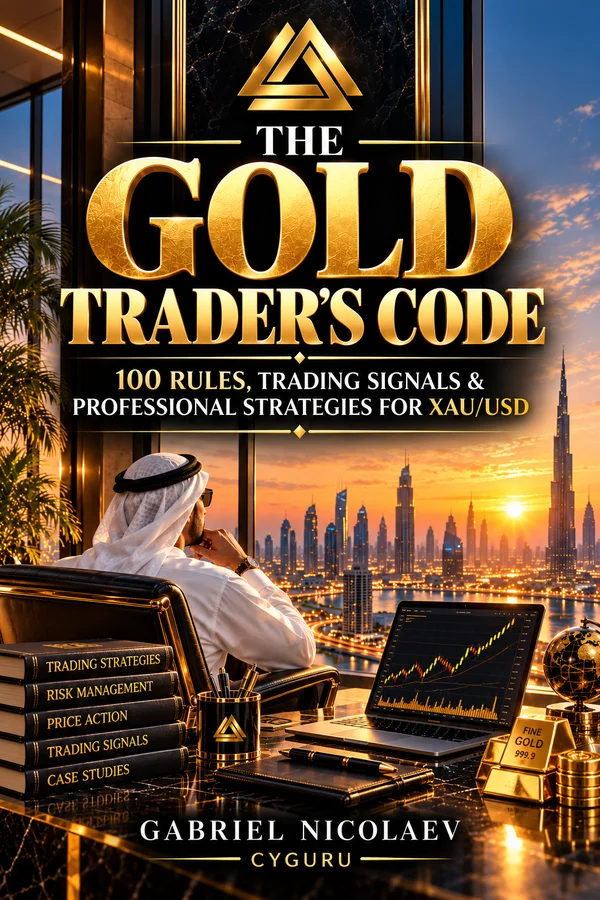
The Gold Trader’s Code
Continue the study of rules and professional trading decisions.
Discover the book ↗Read the book overview →Sources & further reading
Sources consulted 8 November 2026. Editorial frameworks and illustrative examples are identified within the text.