
A connection worth understanding
NIDDK describes irritable bowel syndrome as a disorder of gut–brain interaction. Its explanation links this interaction with changes in sensitivity and bowel function. [1] This is a useful example of medicine examining communication between systems. It should be read in the context of the condition being discussed, rather than extended into a claim that all digestive problems have the same origin.
Keep the condition attached to the claim
An article about a recognised digestive disorder cannot diagnose a reader who has abdominal discomfort. It also cannot establish that stress is the only relevant factor. When reading a health claim, ask whether the source discusses a defined condition, a symptom in general or a hypothesis. Those are different levels of evidence. The title ‘gut–brain connection’ should lead into the details, not replace them.
An observation framework for a conversation
A useful preparation step is to describe the pattern: when the difficulty began, how it affects ordinary activities and whether it has changed. This information is more informative than deciding in advance that the problem must be nervous-system related. The framework here is about communication. It does not prescribe a diet, a supplement or a treatment, and it should not delay care for a concerning or worsening symptom.
Use education to improve the next step
Scientific reading can help people ask more specific questions and understand why a clinician considers several possibilities. It should also make the boundaries of an explanation clearer. A book about the nervous system can provide a broader theme, while the official digestive-health source addresses a particular medical topic. Read them with their different purposes in mind: conceptual education, current health information and individual assessment each contribute something distinct.
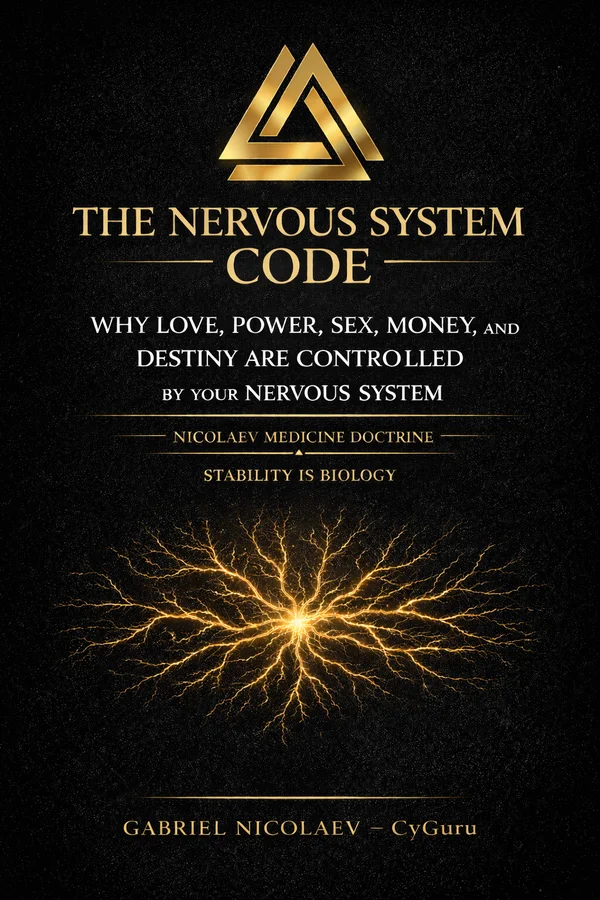
The Nervous System Code
Explore the nervous-system theme in Gabriel Nicolaev’s book collection.
Discover the book ↗Read the book overview →Sources & further reading
Sources consulted 26 October 2026. Editorial frameworks and illustrative examples are identified within the text.