
More income does not always create more freedom
A higher income can change your bank balance without changing the conditions of your life. The next payment arrives, but it already has somewhere to go. Obligations absorb the increase. Work becomes more demanding. The freedom you expected remains dependent on another successful month. That contradiction is the starting point of The Money Code, by Gabriel Nicolaev - CyGuru: what does your income actually allow you to change? The book examines financial behaviour alongside the arrangements through which money enters and leaves a person’s life. Fixed Commitments and the Room to Decide offers a connected starting point in this library.
Creating value and keeping its rewards are different challenges
Being good at your work does not automatically give you control over its terms. A professional can deliver exceptional results while avoiding difficult pricing conversations. An entrepreneur can generate sales while remaining dependent on a single customer. These illustrative situations require different responses; more effort alone does not resolve every constraint. Across forty chapters, The Money Code connects financial behaviour with value creation, pricing, negotiation, ownership and obligations. Its focus extends beyond the amount earned to the terms surrounding that income. Invoiced Versus Paid develops one practical distinction: an encouraging sales total is not the same as money available when a commitment falls due.
When a commercial decision becomes an identity decision
Consider a hypothetical consultant known as the person who always accommodates a client’s request. An additional revision arrives, then another. The consultant recognises the extra work but hesitates to renegotiate. Changing the arrangement feels like risking more than revenue: it threatens the identity of being helpful and dependable. The commercial question concerns scope and price; the personal question concerns what refusing might mean. This is a useful way to approach the author’s framework, rather than treating it as a universal scientific explanation. Contracts, costs and bargaining power remain real constraints. Reflection becomes useful when it helps the reader engage with those conditions more clearly.
What keeps requiring you to repeat?
Imagine two people receiving the same increase in income. One uses it to reduce an existing commitment; the other takes on a new recurring expense. Their earnings improve equally, but the next month begins with different obligations. The example does not establish that every new expense is wrong. It separates additional income from additional room to choose. The book’s presentation describes questions, exercises and structured protocols for examining earning, negotiation and allocation. Read these as tools for enquiry, not a promise of wealth. Name the Expectation Before Helping Family With Money explores another situation where an unstated commitment can matter as much as the amount involved.
Six languages, one question
The Money Code is presented in English, Romanian, Spanish, Arabic, Russian and Chinese. Readers can choose a language through the official CYGURU product page, which links the Apple Books editions. Amazon editions are marked as forthcoming on that page, so they should not be mistaken for currently available purchase links. CYGURU.MONEY is the dedicated companion project promoting the book. Choose the edition you can read most naturally, then begin with a specific question about your own commitments. The central enquiry remains direct: is your money system expanding your choices, or financing the same obligations at a higher level?
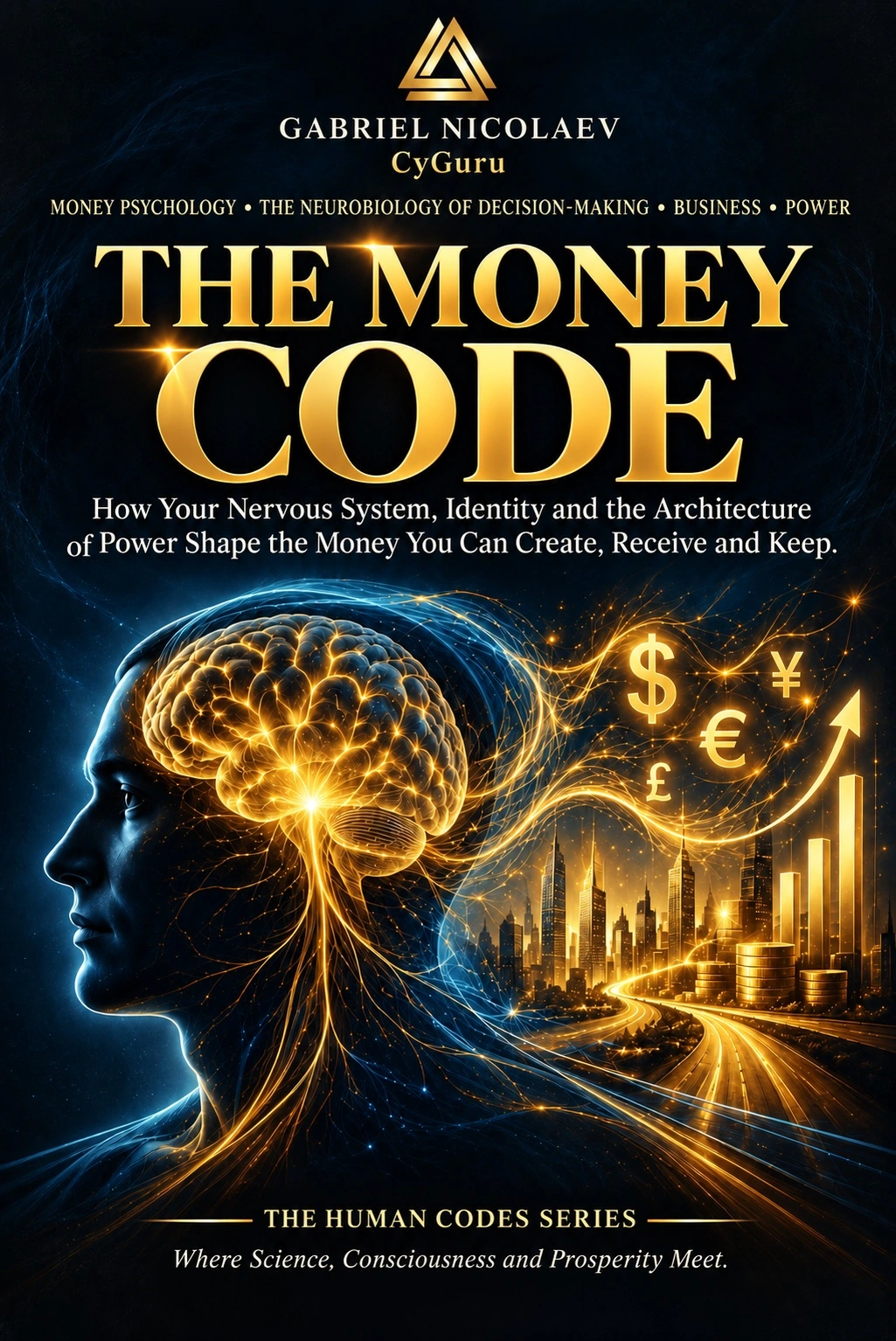
The Money Code
Explore money, identity, pricing, ownership and the choices behind economic freedom. Available in six languages.
Discover the book ↗Read the book overview →Sources & further reading
Sources consulted 9 November 2026. Editorial frameworks and illustrative examples are identified within the text.